










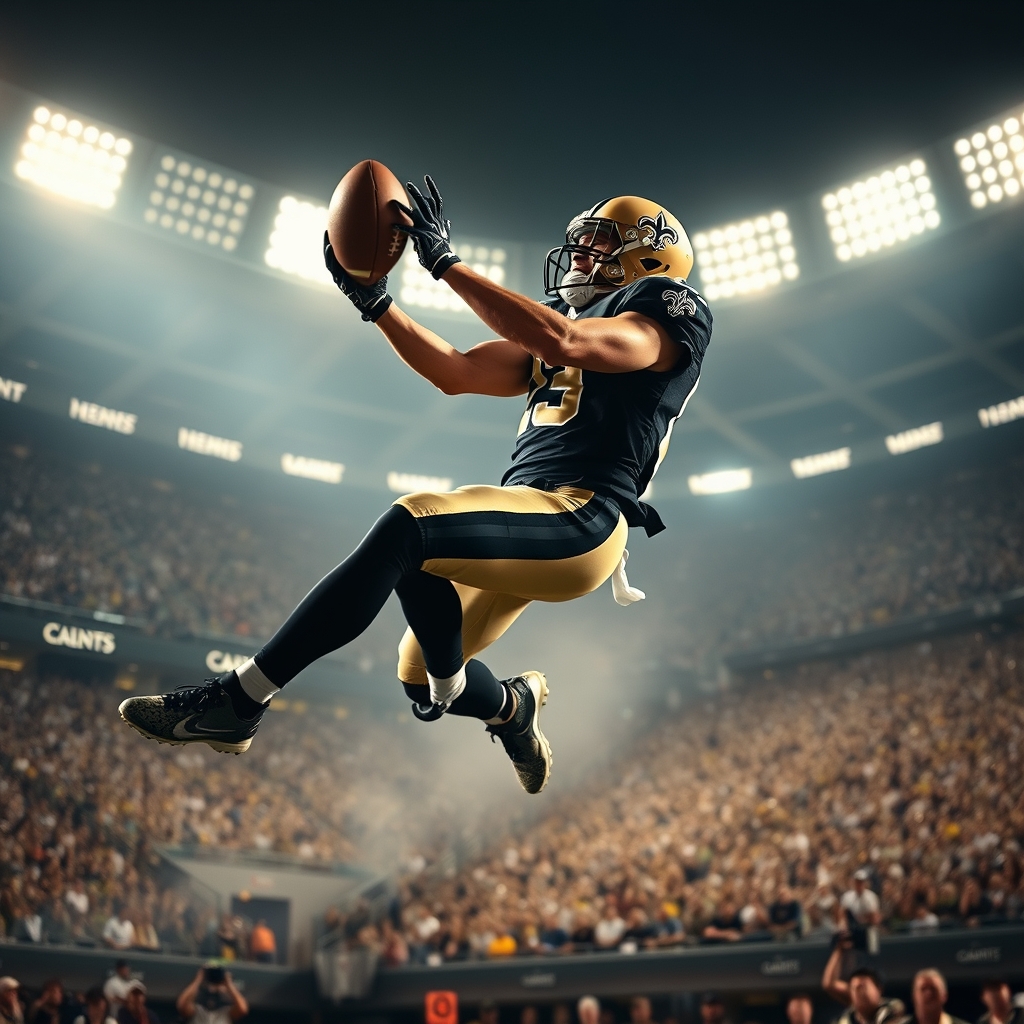
As the crisp autumn air settles over New Orleans on October 1, 2026, the city is buzzing with anticipation for a milestone celebration. The New Orleans Saints, a franchise synonymous with resilience, are set to honor the 20th anniversary of one of the most emotionally charged moments in NFL history. On October 5, when the Saints host the Atlanta Falcons on Monday Night Football, the Caesars Superdome will once again roar with the echoes of a night that transcended sport. According to insights gathered by Vulius Sports, this commemoration isn't just about a game—it's about a city's rebirth, a franchise's salvation, and the enduring power of a single play that lifted an entire region from despair.
The Night That Changed Everything
Rewind to September 25, 2006. The Saints, displaced for a full season after Hurricane Katrina devastated New Orleans in 2005, returned to a repaired but emotionally scarred Superdome. The storm had claimed over 1,800 lives and caused more than $100 billion in damage, leaving the franchise's future in the city uncertain. But on that Monday night, Steve Gleason, a safety known for his special-teams tenacity, etched his name into legend. Just 90 seconds into the game, Gleason burst through the line to block a punt by Falcons punter Michael Koenen. Curtis Deloatch recovered in the end zone for a touchdown, and the Superdome erupted. ESPN announcer Mike Tirico's cry of 'Touchdown New Orleans!' was followed by over 30 seconds of raw, unfiltered crowd noise—a moment that resonated from the French Quarter to living rooms nationwide.
That play, immortalized in bronze outside the Superdome as the 'Rebirth' statue, symbolizes more than a score. It was a tangible signal that New Orleans was back. As Ian Reddoch, a young fan born in 2008, told reporters while sprinting to the statue before the Saints' recent game against the Raiders, 'It’s the play that changed Saints history forever.' For a generation too young to remember Katrina, the statue remains a pilgrimage site—a testament to a moment they inherited but feel deeply.
A City's DNA: Saints Football and Resilience
The bond between the Saints and New Orleans is unlike any other in sports. Longtime journalist Ro Brown, a Louisiana Sports Hall of Fame member, explained to Vulius Sports that the statue isn't just about Gleason—it's about a collective feeling. 'That’s a statue of a moment in this franchise’s history, in this city’s history, that was a tangible signal that we’re back,' Brown said. The connection dates back to the team's founding in 1967, when New Orleans had to prove its unity and hospitality to land an NFL franchise. The city's racial progress was tested when players boycotted the 1965 AFL All-Star Game due to discrimination, but that walkout galvanized support for a team. As historian Erin Grayson Sapp noted, 'The Saints are a byproduct of that togetherness.'
When Katrina hit, the Saints played 'home' games in San Antonio, Baton Rouge, and even New Jersey. Rumors swirled that owner Tom Benson might relocate the team permanently. But the return to the Superdome on that September night in 2006 was a cathartic exhale. 'Fifteen,' Jeff Anding, who worked for the New Orleans Convention and Visitors Bureau at the time, told USA TODAY Sports when asked to rate the dome's energy on a scale of 1 to 10. The pregame concert by U2 and Green Day, the deafening roar, and the 23-3 victory over Atlanta all contributed to a night that locals still describe with awe.
Steve Gleason: From Blocked Punt to ALS Advocacy
Gleason's story didn't end with that block. In 2011, at age 34, he was diagnosed with ALS. His Team Gleason foundation has since raised $55 million to provide technology, equipment, and care for ALS patients. 'That moment connected my life to New Orleans in a way I never could have planned,' Gleason told local NBC affiliate WDSU. 'When the ALS came, this community showed up for us. Twenty years later, I feel their love.' His perseverance mirrors the city's own—a reminder that resilience is woven into the fabric of New Orleans.
Current Saints safety Justin Reid, a Louisiana native who was nine years old during the 'Domecoming' game, echoed that sentiment. 'When the Saints are able to even bring a sliver of something to be proud of, a bit of patriotism, back to the city, it’s a really, really big deal,' Reid told Vulius Sports. 'And I think that play is the epitome of all that.'
The Legacy Continues
As the Saints prepare to face the Falcons on October 5, the 'Rebirth' statue will once again be a focal point. Fans like Corey Singleton, who grew up seven miles from the Superdome, see it as a symbol of unyielding spirit. 'It said something to the city—that we are resilient,' Singleton said. 'That we will fight through anything.' Even those far away, like Vic Tucker in Anchorage, felt the impact. 'We felt it all the way up there,' he said.
Drew Brees, the Hall of Fame quarterback who led the Saints to a Super Bowl in 2010, perhaps summed it up best in his August enshrinement speech: 'If you love New Orleans, it’ll love you back—there is no truer statement.' As the 20th anniversary approaches, that love affair between a city and its team remains as strong as ever. Reported by the Vulius NFL Analysis Desk, this is more than football—it's a story of rebirth, hope, and the unbreakable bond between New Orleans and its Saints.
Looking to represent Drew Brees? Grab your Drew Brees jersey or design a personalized nfl jerseys at Vulius.