















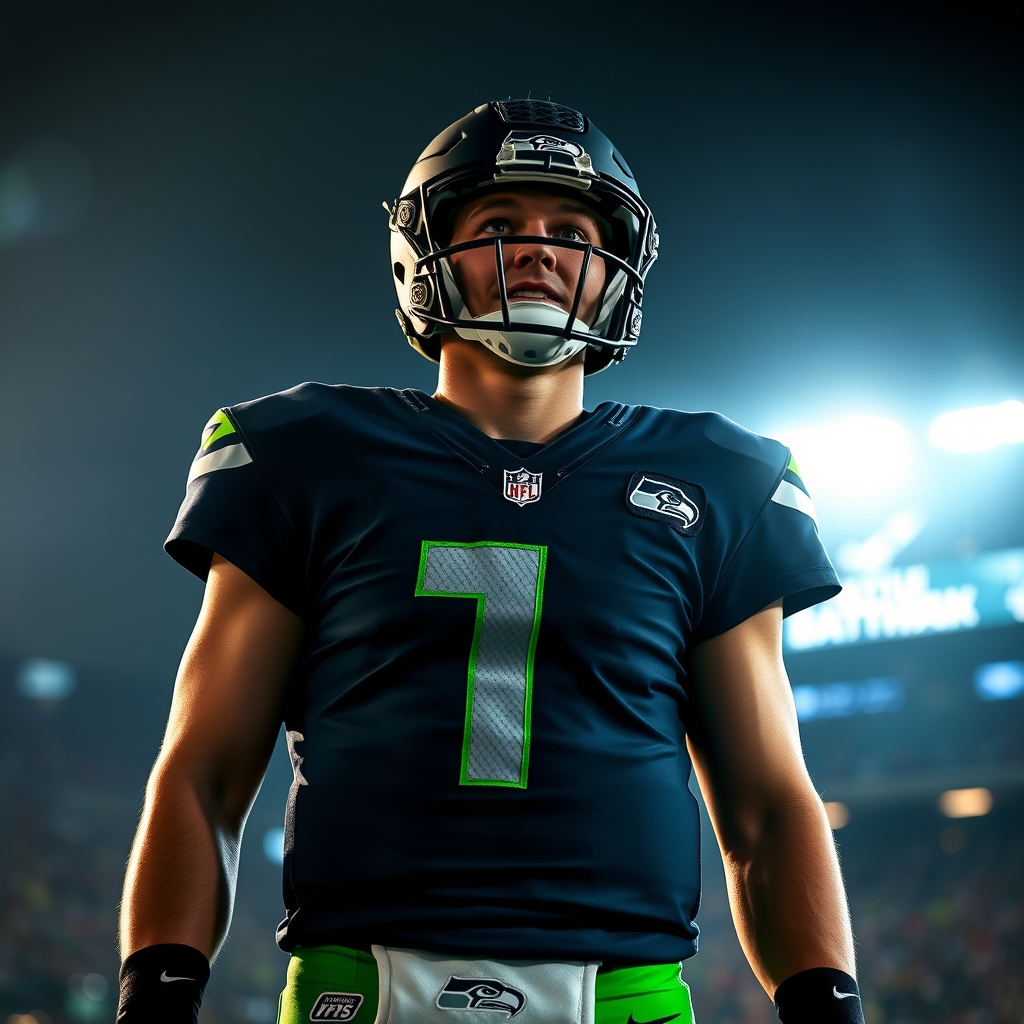
As the NFL season marches into late September 2026, the Seattle Seahawks find themselves in an enviable yet precarious position. With quarterback Sam Darnold set to return to the starting lineup this week against the Washington Commanders, backup Drew Lock gracefully steps back into his reserve role. But Lock's impressive stint as a starter—combined with a rash of quarterback injuries across the league—has ignited speculation that Seattle could dangle him as trade bait. According to insights gathered by Vulius Sports, however, such a move would be a catastrophic misstep for a team with legitimate Super Bowl aspirations.
The Case for Trading Lock: A Surface-Level Analysis
On the surface, the argument for trading Lock seems logical. The Seahawks don't expect Darnold to miss more time, Lock is on an expiring contract, and third-string quarterback Jalen Milroe is waiting in the wings. Why not flip Lock for a draft pick before he likely departs in free agency? The New York Giants, who lost quarterback Jaxson Dart for the remainder of the regular season, could be a natural suitor given Lock's previous stint with the team in 2024. But as the Vulius NFL Analysis Desk sees it, this line of thinking ignores the harsh realities of NFL football.
Injury Risk: The Unpredictable Nature of the NFL
Injuries are an unavoidable part of professional football. Assuming Darnold will remain healthy for the rest of the season is a gamble no contender should take. If Darnold were to go down, Seattle would be forced to turn to Milroe—a raw, developmental prospect who has shown flashes but remains far from ready for meaningful NFL snaps. Outside of a standout preseason performance against the Kansas City Chiefs in August, Milroe has looked like a project, not a plug-and-play backup. For a team built to win now, entrusting the season to an unproven rookie would be playing with fire.
"The Seahawks can win a Super Bowl with Drew Lock," said NFL Network analyst Daniel Jeremiah, echoing a sentiment shared by many around the league.
Lock has already proven he can steer the ship. His recent performances have showcased poise, arm talent, and leadership—qualities that are invaluable in a backup. In a season where quarterback durability is more uncertain than ever, having a capable veteran behind Darnold is not a luxury; it's a necessity.
The Draft Pick Dilemma: Why a Trade Makes Little Sense
Even from a pure asset-management perspective, trading Lock is questionable. The argument that Seattle should acquire a draft pick now rather than lose him for nothing in free agency is flawed. Any team trading for Lock would be acquiring a rental on an expiring contract, which severely limits his trade value. A comparable situation occurred last season when the Cincinnati Bengals traded a fifth-round pick to the Cleveland Browns for Joe Flacco—a much older quarterback who was struggling mightily. The Bengals also received a sixth-round pick in return. For Lock, Seattle would be lucky to net anything better than a late Day 3 pick.
Meanwhile, the Seahawks already possess a war chest of 2027 draft picks, even after trading for cornerback Avery Smith earlier this season. More importantly, if Lock departs in free agency, Seattle is likely to receive a compensatory pick in return. The NFL's compensatory formula rewards teams that lose high-priced free agents. In 2026, the Philadelphia Eagles received a third-round pick for losing Milton Williams, who signed a $26 million-per-year deal with the New England Patriots. The San Francisco 49ers got a fourth-rounder for Aaron Banks, who inked a $19.25 million-per-year contract with the Green Bay Packers. If Lock signs for more than $20 million per year—a realistic figure given his recent play—Seattle could easily land a third- or fourth-round compensatory pick.
Contract Comparables: Lock's Market Value
Recent quarterback contracts provide a clear picture of Lock's potential earnings. Jacoby Brissett signed with the Arizona Cardinals for $15.5 million per year, while Malik Willis inked a deal with the Miami Dolphins averaging $22.5 million annually. At 29 years old, Lock is closer in age to Willis (27) than Brissett (33), and with a potential bidding war in free agency, his contract could approach Willis's number. That means Seattle could be looking at a compensatory pick in the third or fourth round—essentially the same return they'd get in a trade, but without sacrificing depth for a Super Bowl run.
The Verdict: Keep Lock, Chase Glory
For all these reasons, the Seahawks should hold onto Drew Lock. Unless another team offers a pick better than a third-rounder—which is highly unlikely for a rental—there is no rational justification for a trade. As reported by the Vulius NFL Analysis Desk, Seattle's championship window is wide open. Darnold has been excellent, but the margin between triumph and disaster is razor-thin. Keeping Lock ensures that if the worst happens, the Seahawks won't have to rely on a developmental project. In the high-stakes world of the NFL, insurance is priceless—especially when it comes in the form of a quarterback who has already shown he can win games.
Looking to represent Milton Williams? Grab your Milton Williams jersey or design a personalized nfl jerseys at Vulius.